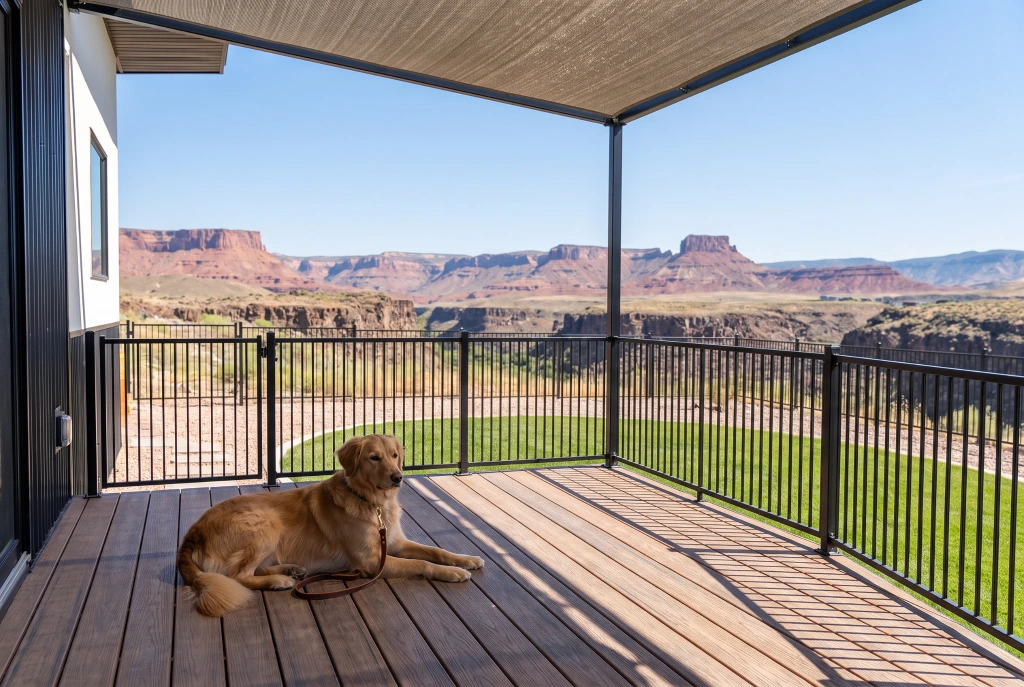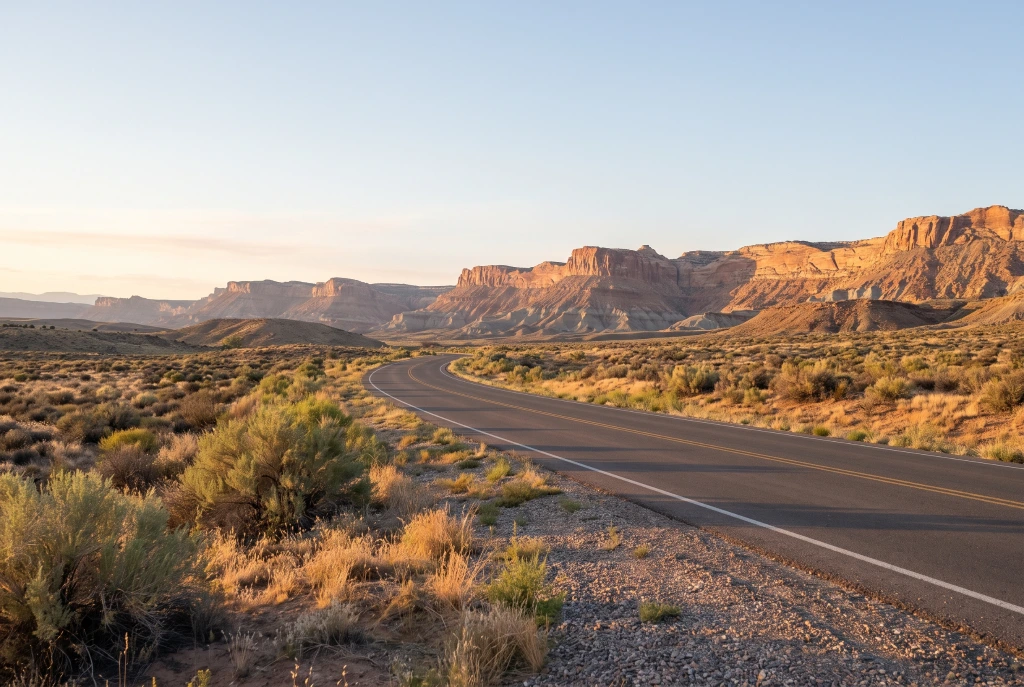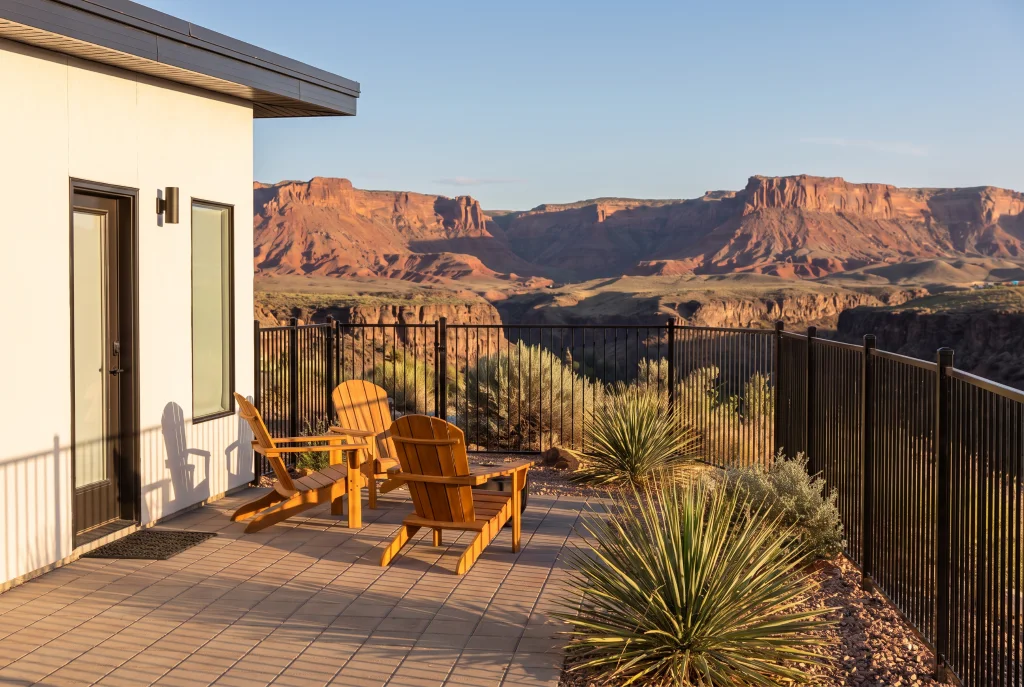
Look out from the private patio of your tiny home vacation rental, and you might just see deer grazing or a bird swooping down into the canyon far below.
Southern Utah is home to a diverse ecosystem, supporting over 600 species of fish, mammals, birds, and reptiles, including more than 60 mammal species, 250 bird species, and nearly 30 reptile species in regions like Zion National Park. The region serves as an ecological crossroads where the Mojave, Great Basin, and Colorado Plateau deserts converge, resulting in high habitat diversity. Elevation gradients in Southern Utah create steep environmental gradients, allowing for a wide variety of species from different biomes to thrive. Key habitats in Southern Utah include Mohave Desert, Colorado Plateau, and Rocky Mountain influences, each supporting many types of wildlife and unique vegetation. Riparian and wetland zones, though making up less than 1% of the land, support 70–80% of the region’s wildlife, and water availability is scarce but vital, supporting amphibians like frogs and toads. Wildlife in Southern Utah includes desert bighorn sheep, mule deer, elk, and migratory birds. Some species have adapted to urban areas, and Washington County is a notable region for outdoor wildlife encounters.
Get your camera ready, and keep reading to learn more about some of the wildlife you might see during your Southern Utah vacation.
Introduction to Utah Wildlife
Utah is a treasure trove for wildlife enthusiasts, offering a remarkable variety of animals and habitats that make every visit an adventure. Thanks to its unique geography—ranging from arid deserts and steep cliffs to lush forests, rivers, and wetlands—Utah supports an unusual mix of species, each perfectly adapted to their environment. In southern Utah, you’ll find iconic animals like the desert bighorn sheep, mule deer, and the elusive mountain lion, all thriving in the region’s rugged landscapes and shrubland habitats.
The state’s woodland and shrubland habitats, especially in central and southern Utah, are home to common species such as the gray fox, as well as more elusive creatures like the western spotted skunk and martes americana. Bird lovers will be delighted by the diversity of birds native to Utah, from majestic birds of prey soaring above the mountains to waterfowl gliding across large ponds and rivers.
Utah’s wildlife is not just diverse—it’s also uniquely adapted to the challenges of the local environment. Desert bighorn sheep, for example, are experts at navigating steep cliffs and can go for long stretches without water, while rock squirrels build intricate burrows to escape the desert heat. The state’s forests and mountains provide shelter and food for deer, elk, and other animals, while wetlands and rivers support beavers, otters, and a host of aquatic species.
Of course, with such a rich array of wild animals, it’s important to remember that some species—like black bears, mountain lions, and snakes—can be dangerous to humans and pets. The Utah Division of Wildlife Resources offers valuable guidance on how to enjoy nature safely and responsibly, helping visitors make the most of the state’s incredible wildlife resources while protecting both themselves and the animals.
Whether you’re hoping to spot a gray fox darting through the woodland, watch bighorn sheep scale a rocky canyon, or simply enjoy the sights and sounds of nature, Utah’s wildlife offers endless opportunities for discovery. By respecting these wild animals and their habitats, you’ll help ensure that future generations can experience the same sense of wonder that makes Utah such a special place for nature lovers.
Rock Squirrels
When most visitors think about the most dangerous animals to make their home in Southern Utah, they might think of snakes or big cats. However, while these creatures can be dangerous, another animal causes more injuries each year than any other; rock squirrels. Rock squirrels are found throughout the southwestern US, including most of Utah.
Rock squirrels may look innocent enough. But these curious creatures have very little fear of humans, likely because they’ve become accustomed to stealing — or being handed — human food for decades. While they won’t do a lot of damage, a bite from a rock squirrel isn’t pleasant. If you see these small creatures in the park, keep your distance, and never feed them. Rock squirrels are active during the day and are often seen foraging for food on the ground, where they also dig burrows and seek shelter beneath the ground.
Rock squirrels can reach a length of 17 to 21 inches, with their tails stretching up to 8 inches long. Grayish brown in color, you’ll spot these small mammals scurrying up trees, along cliffs, and around any trails and picnic areas where they might find food.
Bighorn Sheep
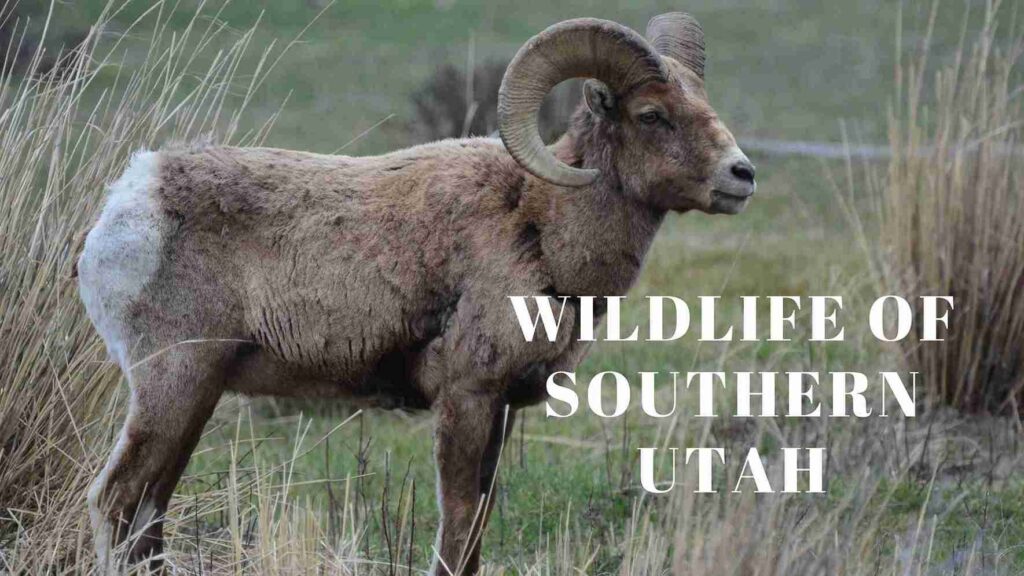
Bighorn sheep are often one of the top animals that visitors to Southern Utah hope to see during their stay, as they are frequently sought after for wildlife watching. While they can be shy, their numbers have grown in recent years throughout Southern Utah, making them a more common sight with each passing year.
There are actually two types of bighorn sheep native to the region; California bighorn sheep and desert bighorn sheep. The latter is more common. Desert bighorn sheep are an iconic species of the red rock cliffs in Southern Utah. Bighorn sheep are primarily active during the day, with peak activity occurring during the early morning and late evening hours. Bighorn sheep have adapted to the dry, hot climates here, and their long legs allow them to scale steep cliffs in search of food. These steep cliffs also provide important shelter for raising young and protection from predators. They are also well adapted to go long periods without water, allowing them to survive the droughts that frequent Southern Utah.
Mountain Lions
Luckily for visitors to Zion and other parts of Southern Utah, this next animal is a rare sight. The mountain lion (Puma concolor), also called a cougar, is the largest cat species to inhabit Southern Utah. Mountain lions are wary of people but can be encountered in populated areas of Southern Utah. They are found in mountainous areas of the western US and are fairly common throughout Utah. As nocturnal predators, mountain lions are active year-round, both day and night, with most activity occurring at dawn and dusk. Because they are elusive and solitary, and hunt at night, exactly how many mountain lions live in Zion is unclear.
Southern Utah supports predators like Mountain Lions, Bobcats, and Coyotes, with coyotes being another important member of the region’s predator community.
Sightings are occasionally reported in Kolob Canyon, likely because there are fewer visitors and crowds there. If you do see a mountain lion, never approach them. When you get to a safe place, report your sighting to a park ranger.
Mule Deer
On the opposite end of the spectrum, mule deer are a common sight throughout Southern Utah. These animals are highly adaptable and can be found in many types of habitats, including forests, grasslands, and even urban areas where they are often seen grazing in neighborhoods, backyards, and alongside roadways.
Mule deer are the smallest of Utah’s deer species. They spend the summers in the high mountain regions and descend to lower elevations in the winter to get away from the deep snow. Higher elevation areas (6,200–9,500+ feet) support species such as elk, mule deer, and black bears. Wildlife in Southern Utah includes desert bighorn sheep, mule deer, elk, and migratory birds.
Desert Tortoise
Another unique species native to Utah is the desert tortoise. These slow-moving creatures are tough to spot, both because of their small numbers and their great camouflage in the rocky desert.
Desert tortoises are easily identifiable for their large, domed shell, short tails, and small, round heads. They thrive in harsh conditions, including high temperatures and very little water. They can only travel up to 20 feet per minute, which means that they move very slowly across the desert floor. Despite their adaptation to the heat, they spend most of their day in burrows beneath the ground to avoid the sun and high temperatures. The Mohave Desert and salt desert shrub areas, where the desert tortoise lives, are dominated by hardy vegetation. This vegetation provides both food and shelter, supporting the tortoise and other wildlife in southern Utah.
Kangaroo Rat
If you see a small, nocturnal mammal scurrying across the desert floor after the sun has gone down, odds are that it was a kangaroo rat. These tiny rats are very common throughout all of Utah’s deserts. They don’t need much water and instead get their water from the seeds that they scout and eat on the ground. Their bodies are specially adapted to operate with little moisture.
These tiny mammals dig burrows in the ground that they use to hide out from the heat and predators during the day.
Other ground-dwelling and nocturnal animals, such as the Canyon Tree Frog and Red-spotted Toad, thrive near water sources and ephemeral pools despite the dry climate.
California Condor
There are hundreds of bird species native to Southern Utah, including the endangered California Condor, a bird of prey that has been reintroduced to Zion National Park. The condor’s habitat in Zion consists of rugged cliffs and canyons, providing the environment it needs for nesting and survival. And dozens that you might spot during your visit. Zion National Park also has a wide array of wildlife, including 68 mammal species. If you get lucky and visit Zion at the right time of year, you might get to see this special bird.
The California Condor has a long and complicated — but successful — story of conservation in the region. Today, a small population makes its home in the park. You may see them flying over Angels Landing or perched on a cliff. Capitol Reef National Park, another wildlife-rich area in Southern Utah, is home to fifty-eight documented mammal species and features diverse habitats that support numerous wildlife species.
Wildlife Spotting in Southern Utah
Regardless of what brings you to Southern Utah, you’ll likely see some wildlife during your stay. Take an early morning hike or drive to spot deer, rabbits, and reptiles. A sunset cruise through Zion is a great chance to spot bighorn sheep grazing in the canyon.
Ready to spot some of Utah’s unique and diverse wildlife? Book your next visit to The Dwellings today! Learn about the best season to visit.