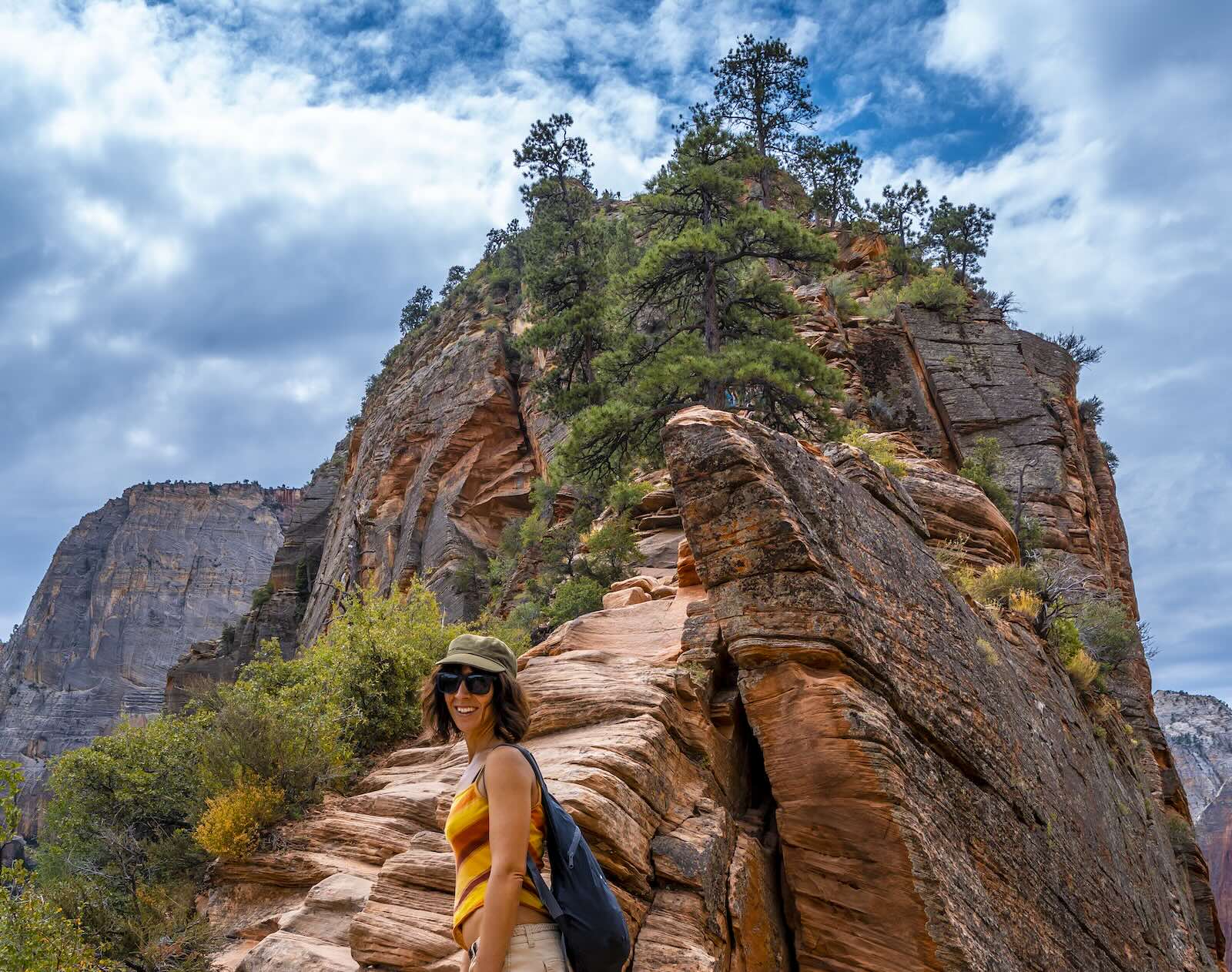
Capturing a selfie with your friends while hiking Angels Landing or capturing a frame-worthy picture of the red rock desert is likely high on your list of digital souvenirs you want to take home from your next visit to Southern Utah. Using a tripod is essential for landscape photography to prevent camera shake and ensure a sharp image, especially in low light or when using slow shutter speeds.
While getting a shot of a Bighorn Sheep or even a California Condor is exciting, there’s no shortage of stunning landscapes to capture during your visit. When photographing wildlife, be ready with the proper exposure settings and consider your lens focal length and focal length to capture fast-moving animals and maintain image sharpness.
You’re going to want to capture some of those landscapes to share with friends and family back home and create lasting memories of an incredible trip. To improve your landscape pictures, revisit the same location multiple times to capture ideal conditions, use a low ISO setting (100-400) to reduce graininess, and select a mid-range aperture (f/8 to f/16) for sharp, clear images. A good landscape photography kit should include many cameras or a variety of lenses, such as an ultra wide angle lens, standard zoom, and telephoto, and mirrorless cameras or high-resolution digital cameras are excellent choices for taking landscape pictures. Consider using a polarizing filter on your camera lens to enhance color and contrast while reducing glare, and ND filters to allow for longer exposures and smooth effects in moving water or clouds. When composing your shot, include foreground interest and other elements to add depth and guide the viewer’s attention to the main subject, and use leading lines like rivers or paths. For balanced images, use the thirds overlay as a compositional aid. Always monitor your histogram to ensure correct exposure and avoid clipping highlights or shadows, and use aperture priority mode or manual mode to control your exposure settings for proper exposure. Avoid harsh midday sunlight and seek the best light during early morning or late afternoon. Shoot in RAW format to retain maximum image data for post-processing, and remember that post-processing is key to enhancing your landscape photographs. Scouting your location ahead of time, and even returning to the same location, can help you find the best angles and compositions. In 2026, trends like vertical-first compositions and minimalistic style using negative space are anticipated to shape landscape photography. Timing, lighting, and scene selection within a vast landscape can greatly enhance the quality of your landscape pictures.
Skip the Mid-day Photo Shoot
Even the best photographers will struggle to take perfect, crisp photos when the sun is high and bright overhead. Harsh sunlight will wash out your photo’s colors and obscure the details, ruining your shot. Photographers should avoid shooting in harsh midday sunlight as it can create strong shadows and high contrast, making it difficult to achieve proper exposure and correct exposure in your landscape pictures.
The best light for landscape photography is often found during the early morning or late afternoon. Unless you’re using a DSLR camera or one with settings for bright natural light, aim to get your shots in early or late in the day, when the sun is less harsh. The “Golden Hour,” a term used to describe the yellow light that floods the air as the sun goes down, is one of the best times to take landscape photos or any photos for that matter. Capturing a great shot often depends on timing and lighting conditions, especially during golden hour or when the scene has high dynamic range. The stunning color makes for dreamy atmospheres, while the dimmer light will help bring out details in your photos. Capturing a vast landscape during golden hour can enhance the quality of your landscape pictures and add visual impact. As soon as you notice the light beginning to change, start snapping; the more light you lose, the harder it will be to take clear photos, particularly if you’re using a smartphone.
If you’re using a good camera and are familiar with setting your shutter and adjusting your exposure settings, you can continue taking photos as the Golden Hour turns into the Blue Hour. This is another great time for taking unique, dramatic shots. In challenging lighting, be sure to adjust your exposure settings to achieve proper exposure and correct exposure. For maximum depth and sharpness in your landscape pictures, use a small aperture (high f-stop) to keep the entire scene in focus.
Don’t Worry About Getting the “Perfect” Shot
If thinking of landscape photos brings to mind only perfectly framed mountain views or a snap of a cascading waterfall, it’s time to widen your horizons. Including foreground interest and other elements, such as rocks or plants, can add depth to your landscape image and help guide the viewer’s attention to the main subject.
One of the best ways to capture landscape photos that you’ll cherish is to always be ready to start shooting away. Sometimes it’s the view that you didn’t think of that winds up looking like artwork in your lens. An interesting pattern in the rocks, a desert cactus, or lines in a sand dune can all make for interesting, beautiful shots. Using leading lines in your composition can draw the viewer’s attention to the main subject and create a sense of movement through the landscape image. Keep in mind that wide shots may capture less detail, while focusing on specific features can highlight more intricate details. Always being ready to start taking photos, rather than waiting for the ‘perfect’ view, will ensure you never miss a shot.
Understand Your Camera’s Settings
Many modern cameras come equipped with settings designed for taking landscape photos. For shooting landscapes, consider using aperture priority mode or manual mode to control your exposure settings and achieve the desired effect. These settings may do things like widen your camera’s field of view or adjust your shutter for a longer exposure. Understanding the three main camera settings—shutter speed, aperture, and ISO—is crucial, as they form the exposure triangle; adjusting one will require compensating with the others to maintain proper exposure. Monitoring the histogram while shooting helps you avoid clipping highlights or shadows, ensuring balanced exposure in high dynamic range scenes. If you aren’t comfortable adjusting your camera’s settings on your own, it’s best to switch over to this setting when you’re ready to take a shot.
Many mirrorless cameras now offer a thirds overlay in the viewfinder, which helps you compose balanced and visually appealing landscape photographs. Just because you aren’t shooting with a DSLR camera doesn’t mean you won’t have a landscape setting at your disposal. Many smartphones now feature camera settings that you can use to level up your photography game. If your phone doesn’t have a landscape setting, you can also take advantage of apps designed to help you take better photos. Besides adjusting your phone’s camera, these apps also help guide you through framing your photo and getting enough light.
When using a camera lens for landscape photography, consider attaching filters such as polarizing or ND filters directly to the lens to enhance image quality and achieve creative effects. Understanding lens focal length and focal length is important for achieving maximum depth and sharpness in your landscape photographs, as it influences composition and depth of field. To maximize sharpness from foreground to background, use a narrow aperture (high f-stop) for maximum depth of field. Shooting in RAW format will help you retain maximum image data for post-processing. Employing back-button focus is an advanced technique that separates focusing from the shutter release, giving you more control. For stability and sharp images, especially in low light or when using slow shutter speeds, always use a tripod.
Play with your camera or smartphone’s settings before your trip so that you’ll be ready when you see a landscape shot that you want to capture.
Capturing Depth of Field in Utah Landscapes
One of the secrets to creating immersive landscape photos is mastering depth of field. Many landscape photographers use a small aperture (like f/11 or f/16) to achieve a large depth of field, ensuring that both the foreground and background are in sharp focus. This technique is especially effective when photographing Utah’s vast landscapes, where you want every detail—from the closest rock to the distant mountains—to be crisp and clear. Keep in mind that a smaller aperture often requires a slower shutter speed, so using a tripod can help prevent camera shake and maintain image sharpness. Wide angle and ultra wide angle lenses are also popular choices, as they allow you to include more of the scene and emphasize foreground elements for added depth. By understanding how to control depth of field, you’ll be able to create landscape images that draw the viewer in and showcase the full beauty of Utah’s natural wonders.
How to Take Photos of Landscapes: Capture Stunning Utah Photography Tips
Landscape photography is a rewarding genre that allows you to capture the beauty of the natural world. To create a stunning landscape image, it’s important to master the three elements of landscape photography: camera gear technique, composition, and post-processing. These foundational aspects work together to help you produce impactful landscape photographs.
When it comes to composition, most photographers and many photographers agree that good composition is essential for compelling landscape images. The rule of thirds is a common composition technique that divides the frame into nine equal parts using two horizontal and two vertical lines. Positioning key elements along the thirds grid leads to better composition and helps guide the viewer’s eye to the main subject. Using the thirds grid can also help you level horizons and achieve more visually balanced shots.
The goal of shooting landscapes is not just to document a scene, but to create a landscape image that resonates with viewers. A well-composed landscape photo arranges visual elements to catch the viewer’s eye, tell a story, or evoke emotion. Many photographers rely on natural light and careful timing, as unlike portrait photographers, they cannot use external lighting equipment. Most photographers recommend planning your shoot around the best lighting conditions, such as golden hour, to increase your chances of capturing a great shot.
Capturing a great shot often depends on the right moment and natural light. Timing your shoot for sunrise or sunset can dramatically enhance the mood and colors in your landscape photographs.
To improve your skills, take photos regularly and seek opportunities to learn from a professional photographer. Practicing in the field and receiving feedback from experts can accelerate your progress and help you master the art of shooting landscapes. With attention to the three elements and a focus on good composition, you’ll be able to create landscape images that stand out.
Introduction to Landscape Photography
Landscape photography is all about capturing the breathtaking beauty and unique character of the natural world. Whether you’re standing before Utah’s dramatic red rock formations or a tranquil alpine lake, the goal is to create landscape photos that transport viewers right into the scene. Many landscape photographers rely on wide angle lenses to showcase the vastness of a landscape, while others experiment with different focal lengths to highlight specific features. Mastering your camera settings—like adjusting shutter speed for the perfect exposure or choosing the right aperture—can make a huge difference in the quality of your images. With a little creativity and patience, you’ll find that landscape photography is not only rewarding but also a wonderful way to connect with nature and share your adventures with others. In this section, we’ll cover the basics to help you start taking great landscape photos, no matter your experience level or camera type.
Planning and Research for Your Utah Adventure
Before you set out to photograph Utah’s stunning scenery, a little planning and research can go a long way in elevating your landscape photography. Start by scouting the best locations—whether it’s iconic national parks or hidden local gems—using online resources, photography blogs, and social media for inspiration. Many landscape photographers recommend checking sunrise and sunset times, as well as weather forecasts, to ensure you’re in the right place at the right time for optimal lighting. Understanding composition rules, like the rule of thirds, can help you frame your landscape photos in a way that draws the viewer’s eye and creates a more dynamic image. By preparing ahead and learning from other landscape photographers, you’ll be ready to capture great landscape photos and make the most of your Utah adventure with your camera in hand.
Choosing the Right Equipment for Landscape Photography
The right equipment can make a significant difference in your landscape photography, helping you achieve sharp, vibrant images that truly stand out. Many landscape photographers opt for a high-quality digital camera, such as a mirrorless camera, for its versatility and image quality. Using a tripod is essential for stabilizing your camera, especially when shooting with a small aperture or experimenting with long exposures to capture movement in clouds or water. A polarizing filter is a favorite tool for reducing glare and making colors pop, while a neutral density filter (ND filter) allows you to use slower shutter speeds for creative effects, even in bright conditions. Don’t forget to consider depth of field—using a shallow depth for selective focus or a greater depth for maximum detail across the scene. By investing in the right gear and learning how to use it, you’ll be well-equipped to take your landscape photography to the next level.
Understanding Landscape Composition
Great landscape photos are as much about composition as they are about location or lighting. Landscape composition is the art of arranging elements within your frame to create a visually compelling image. Many landscape photographers use the rule of thirds, placing key features along the grid lines to create balance and interest. Leading lines—like winding trails, rivers, or fences—can guide the viewer’s eye through the photo, while foreground elements such as rocks, wildflowers, or trees add depth and invite viewers into the scene. Paying attention to how you position these elements can transform a simple landscape into a striking image. By practicing these composition rules and experimenting with different perspectives, you’ll develop your own style and consistently capture great landscape photos that stand out.
Capturing Some Stunning Landscape Shots During Your Next Visit to Southern Utah
The photos you’ve taken yourself are some of the best souvenirs that you can take home with you from your visit to Southern Utah. Scouting your location ahead of time can help you determine the best angles and compositions for your landscape pictures. While wildlife photos are a popular digital souvenir, don’t forget to look out for stunning landscapes that you’d like to capture as well. In fact, you’ll find some incredible views of these landscapes right from your vacation rental and private patio. Using a tripod is essential for landscape photography, especially in low light, to ensure your landscape images are sharp and clear. Keep these tips in mind, and you’ll come home with landscape photographs you’ll love to share and display, and reflect back on for years to come. Good composition and guiding the viewer’s eye can make your landscape photographs more memorable. Taking photos at the same location during different times of day or year can help you capture a great shot of a vast landscape.
If you’re eager to put your photography skills to the test, it’s time to book your next visit. Fall is a particularly great time to visit the region, as the bright colors of the changing trees make the landscape come alive. Whether you’re shooting landscapes for the first time or looking to improve your landscape image portfolio, book your stay today to guarantee your spot this fall!