Most visitors to Southern Utah are hoping to catch sight of some wildlife during their trip. From Bighorn Sheep to elusive foxes to curious rock squirrels, there’s no shortage of creatures to see. But don’t forget to look up every once in a while during your visit as well.
The skies of Southern Utah are just as diverse and interesting as the rest of the region. Hundreds of bird species call the area home. As of July 2022, there were 469 bird species documented in Utah. Southern Utah hosts over 200 bird species across diverse habitats such as desert scrub, riparian woodlands, and high-elevation cliffs. Several species from different bird families can be found here, highlighting the region’s rich avian diversity. Some are found only in this region. Various habitats in Southern Utah include desert scrub, wetlands, and mountain forests, providing diverse birdwatching opportunities. If you’ve got a trip to Southern Utah planned, keep reading. We’re bringing you a few of the bird species you might get lucky enough to see.
Introduction to Southern Utah’s Birdlife
Southern Utah is a paradise for bird lovers, offering a remarkable variety of bird species thanks to its diverse landscapes. From the arid red rock deserts to lush mountain forests and winding river valleys, each habitat supports its own unique community of birds. Over 400 species have been recorded in the region, making it a hotspot for birdwatching in Utah. Among the many birds you might encounter are the striking White-crowned Sparrow, known for its crisp black-and-white head stripes, and the melodious Northern Mockingbird, famous for its ability to mimic the songs of other birds. The tiny Broad-tailed Hummingbird dazzles with its iridescent colors, while the House Finch adds a splash of red to backyards and parks. Dense vegetation and mature tree trunks provide essential shelter and nesting sites, attracting both common and rare species. Of course, the majestic California Condor is a true highlight, soaring high above the canyons and cliffs. Whether you’re exploring a remote trail or relaxing in a shaded grove, Southern Utah’s birdlife offers endless opportunities for discovery.
The California Condor
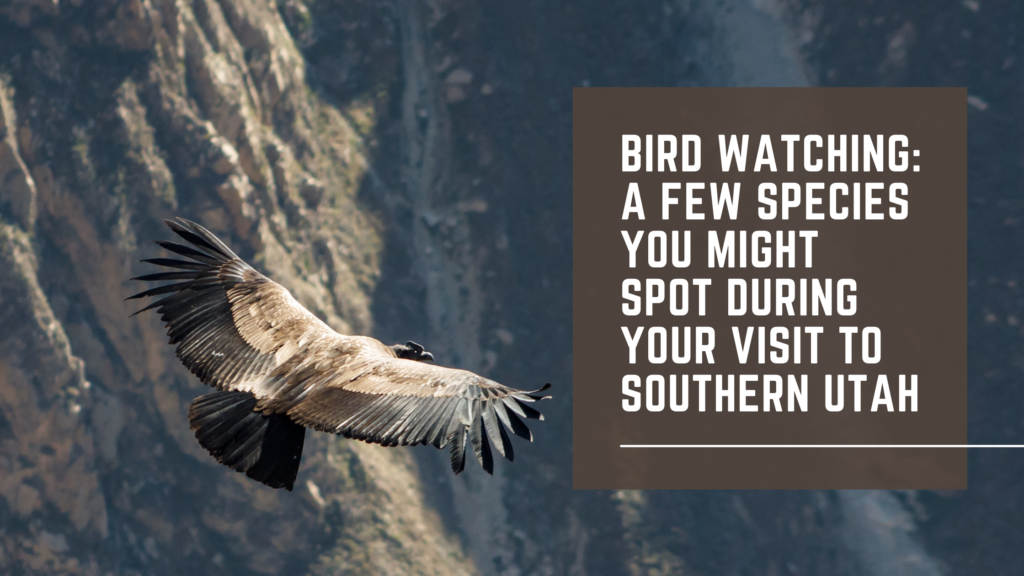
Perhaps the best-known bird to make its home in Southern Utah is the California Condor. Their popularity can’t be attributed to their numbers, even though they are on the rise today. Instead, they’ve become a symbol of what happens when humans put their minds towards saving a species on the brink of extinction.
California Condors’ habitat once stretched across much of the U.S. and into Mexico. However, in modern times, a variety of human-led factors, like deforestation and pollution, led to their rapid decline. By 1982, there were just 22 known individuals alive. Those survivors were all captured and placed in a protective breeding program. Now, the California Condor has been reintroduced into the wild, and their numbers are growing.
One spot that you might get lucky enough to see one of these special birds is in Zion National Park. The park is a refuge for the species and is frequently seen nesting on the cliffs, soaring above Angels Landing, or perched high in the treetops. These birds are easy to spot, thanks to their large size, dark black feathers, and distinctive redheads.
As with any wild animal that you encounter, never feed or approach a California Condor. However, have your camera ready to snap a few souvenir pics of this special creature.
Mexican Spotted Owl
Another endangered bird species you might get lucky enough to spot in Southern Utah is the Mexican Spotted Owl. While the species hasn’t seen the resurgence that the California Condor has, the Mexican Spotted Owl has found some areas of refuge in the region, and particularly near Zion National Park. Here, the slot canyons offer the perfect hiding spot, with cool air for hot summer days and plenty of lush greenery and trees to support the prey that they feed on.
The Mexican Spotted Owl is the fifth largest of the owl species found in North America. Their wingspan can reach up to 45 inches. Both male and female Mexican Spotted Owls have large bodies covered in mottled brown and white feathers. They also feature oversized, dark eyes that are distinctive of owls. Because of their limited numbers, these owls are a rare sight, although there are 15 known nesting areas within Zion National Park today.
American Dipper
If you were to spot one of these gray-colored, small birds in the wild, you might not think twice about it. But catch it in action and you’ll quickly see why this species is such a treat to see.
The American Dipper has a very unique distinction; it’s the only aquatic songbird native to North America. These birds can swim or walk along the bottoms of streams in search of food, but still take to the trees to sing their own bright, chirpy songs to communicate with one another. American Dippers eat insects and other small aquatic creatures as part of their diet. Their strong wings even allow them to dive and swim up to 20 feet at a time.
Riparian habitats along rivers attract species such as the American Dipper and Southwestern Willow Flycatcher.
Hummingbirds
Utah is home to several hummingbird species, though two, in particular, are the most commonly spotted ones in the southern part of the state. The first is the Broad-Tailed Hummingbird. These tiny birds typically stay close to water and can thrive at higher elevations. Males are easy to spot, thanks to their red throats and white chest feathers. The females don’t have the same red patch, and instead are mostly green with some rust-colored feathers on their backs.
The other common hummingbird species is the Black-Chinned Hummingbird. Like the Broad-Tailed Hummingbird, these birds stay close to water; however, they prefer lower elevations or mid-elevations compared to their higher-elevation cousins. Males have a shimmering throat that features purple feathers around the edge and pale feathers below. Females don’t have the same shimmery feathers but do have the same pale throat.
Common Raven
As their name suggests, this next species is a common sight throughout Southern Utah. These large, jet-black birds are often seen flying high above the red rock cliffs, perched in small groups in trees, or hopping about on the side of the road. Their loud, tell-tale cawing can often be heard before you can even see them.
While Common Ravens are widespread in Southern Utah, they are often confused with the American Crow. The American crow is generally smaller than the raven, with a more slender bill and a fan-shaped tail. Crows are highly intelligent, social birds known for their adaptability, and are often found in urban areas, backyards, and open fields. Unlike ravens, crows tend to form larger flocks and have a more varied vocalization. The American crow prefers habitats such as farmlands, woodlands, and city parks, and is recognized for its problem-solving skills and opportunistic feeding behavior.
These birds are very adaptable and can be found at a variety of elevations throughout the region. They aren’t picky about their prey, feeding on many small animals and reptiles found in the region. When food is scarce, such as during the winter, these birds become carrion feeders, searching for dead animals. In areas such as National Park campgrounds and picnic areas, these birds have become a bit too adapted to the presence of humans and will steal food from garbage cans or even right off of picnic tables.
Common Ravens are frequently seen in Southern Utah.
Woodpeckers and Nuthatches in Southern Utah
Southern Utah’s forests and woodlands are alive with the sounds and sights of woodpeckers and nuthatches. The Northern Flicker, with its bold markings and distinctive call, is often seen foraging on the ground or drumming on tree trunks in search of insects. The Downy Woodpecker, one of the smallest woodpecker species, can be spotted flitting among branches, tapping for small invertebrates hidden beneath the bark. Nuthatches, such as the Red-breasted Nuthatch, are easily recognized by their habit of climbing down trees head-first, a unique behavior among birds. These agile climbers use their sharp bills to probe for insects and larvae, helping to keep trees healthy. By feeding on insects and other small creatures, woodpeckers and nuthatches play a vital role in maintaining the balance of Southern Utah’s ecosystems. Their bright plumage and energetic movements make them a favorite among birdwatchers exploring the region’s wooded areas.
Waterbirds and Wrens in Southern Utah
The lakes, rivers, and wetlands of Southern Utah provide a haven for a variety of waterbirds and wrens. The American Coot, with its dark body and white bill, is a common sight paddling across ponds and marshes, feeding on aquatic plants and small animals. The American Dipper, a true marvel, can be found along fast-moving streams, where it dives underwater in search of insects and other prey. Wrens, such as the lively Bewick’s Wren and the adaptable House Wren, fill the air with their cheerful songs as they flit through shrubs and undergrowth. These birds are well-adapted to the unique conditions of the desert southwest, using specialized feathers and behaviors to thrive in both wet and dry environments. And for those visiting Zion National Park, the chance to spot the rare California Condor soaring overhead is an unforgettable experience, highlighting the incredible diversity of birds that call Southern Utah home.
Finches and Sparrows in Southern Utah
Finches and sparrows are among the most familiar and widespread birds in Southern Utah, bringing color and song to both wild and urban landscapes. The House Sparrow and House Finch are year-round residents, often seen in small flocks around towns and gardens. In more natural settings, the bright yellow American Goldfinch and the smaller Lesser Goldfinch can be found feeding on seeds among thistles and sunflowers. During the colder months, winter visitors like the Dark-eyed Junco and White-throated Sparrow arrive, easily recognized by their distinctive tail feathers and pale throats. These birds are important seed eaters, helping to disperse plants and maintain healthy habitats. Watching the social interactions and feeding behaviors of these species is a delight for birders of all ages, and their presence is a testament to the rich avian diversity of Southern Utah.
Keep Your Eyes on the Sky to Spot These Southern Utah Natives
From the iconic California Condor to the unique American Dipper, there’s no shortage of bird species to see in Southern Utah.
In fact, you might even get lucky enough to catch sight of a few from your private patio at your vacation rental. Don’t have a trip booked just yet? Book today and spend a night, a weekend, a week or even longer relaxing in the heart of the action of Southern Utah.
Birding Tips and Tricks
If you’re planning to go birding in Southern Utah, a little preparation can make your experience even more rewarding. Start by bringing along a reliable field guide, such as the one from the Cornell Lab, to help you identify the many bird species you’ll encounter. Pay attention to the preferred habitat of each species—some birds favor dense vegetation, others are found on tree trunks, while some prefer open country. Binoculars and a spotting scope are essential tools for getting a closer look at birds without disturbing them. For the best birding opportunities, visit popular spots like Zion National Park, where a variety of habitats attract an impressive array of birds. Remember to move quietly and respect the natural environment, giving birds plenty of space. With these tips in mind, you’ll be well-equipped to enjoy the incredible birdlife that Southern Utah has to offer.