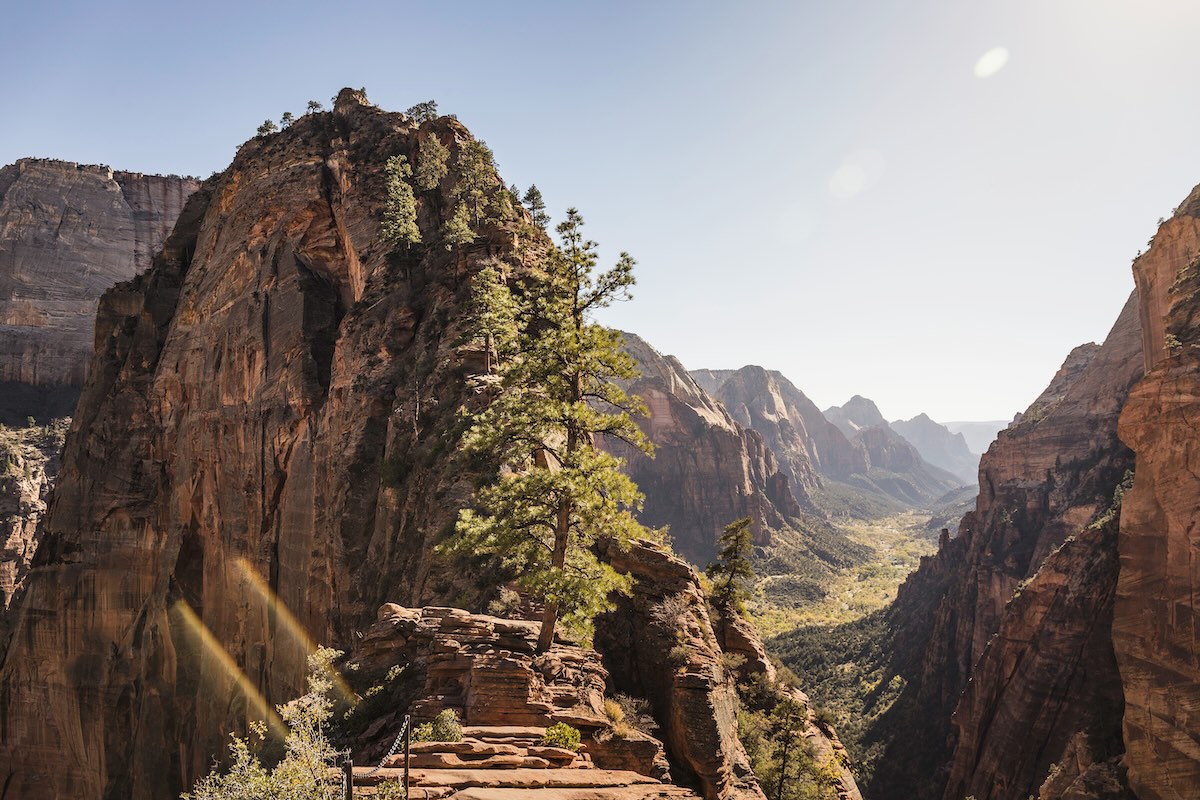
Angels Landing stands as Zion National Park’s crown jewel hike—a heart-pounding, chain-gripping adventure that rewards brave souls with some of the most spectacular views in the American Southwest. If you’re searching for the ultimate bucket-list trail that combines serious physical challenge with jaw-dropping panoramas of Zion Canyon, you’ve found your next adventure.
This guide covers everything you need to successfully hike Angels Landing: the permit acquisition process, detailed trail logistics, essential safety protocols, and insider strategies for making your summit attempt unforgettable. We won’t dive into backcountry camping regulations or technical canyoneering—this is purely focused on conquering one of Utah’s most legendary day hikes. Whether you’re an experienced peak-bagger or an ambitious intermediate hiker ready to level up, this guide has you covered.
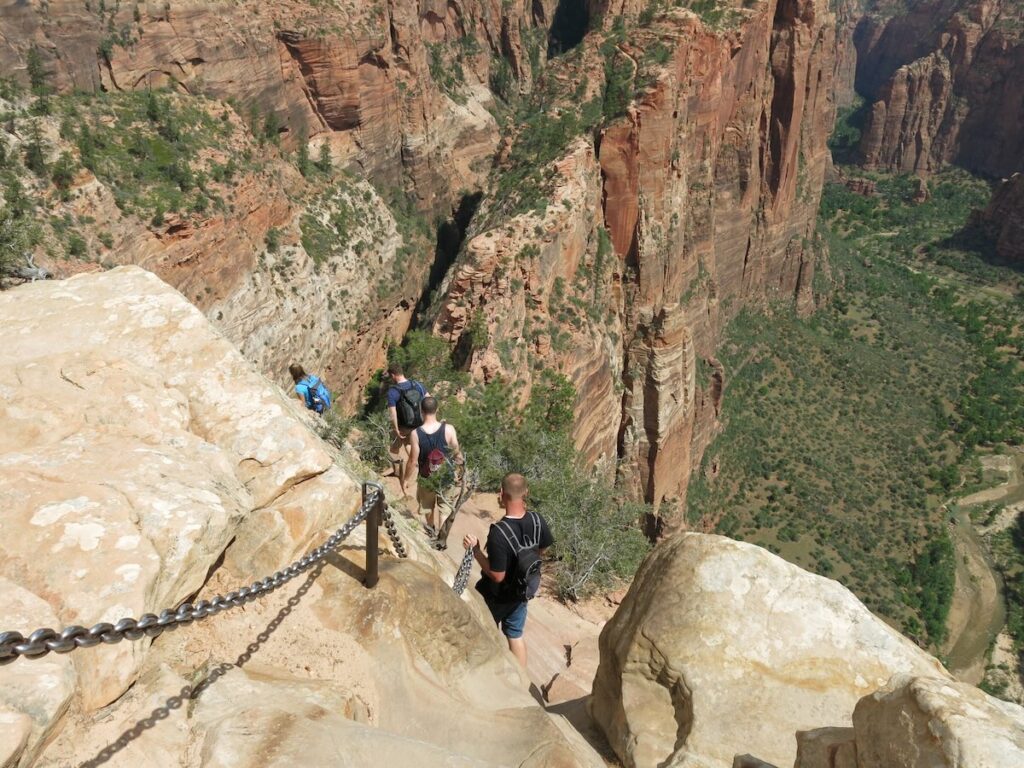
The quick answer: Angels Landing is a 5.4-mile round-trip strenuous hike requiring a mandatory permit, featuring the infamous chain-assisted cliff sections with 1,488 feet of elevation gain. The final half mile section involves gripping metal chains while navigating a knife edge ridge with sheer drop offs on both sides—and it’s absolutely worth every adrenaline-pumping moment.
What you’ll gain from this guide:
- Master the permit program including seasonal lottery and day before lottery strategies
- Navigate every trail section from Grotto Trailhead to the Angels Landing summit
- Prepare physically and mentally for the exposed chain sections
- Time your hike perfectly for ideal conditions and minimal crowds
- Know exactly what gear to pack for success and safety
Understanding Angels Landing Trail System
The Angels Landing trail represents the pinnacle of Zion National Park hiking experiences, drawing adventure seekers from around the globe to test their mettle against this iconic rock formation. Rising 1,488 feet above the canyon floor, this Navajo Sandstone fin has been carved by the Virgin River over millions of years into what Methodist minister Frederick Fisher declared in 1916 as a place “only an angel could land.”
For hikers planning their Zion conquest, The Dwellings serves as the perfect base camp for all Zion adventures, offering luxurious proximity to the park’s east entrance with seamless shuttle access to trailheads. After conquering Angels Landing, you’ll appreciate having a rejuvenating home base to recover and plan your next trip into the park.
Trail Classification and Difficulty
The National Park Service rates the Angels Landing hike as strenuous—and they mean it. This isn’t your typical national park walk; it’s a genuine athletic endeavor requiring solid cardiovascular fitness, sure-footedness, and comfort with exposure. The trail begins deceptively mildly but quickly transforms into steep switchbacks and heart-pounding cliff-edge traverses.
Compared to other popular trails in Zion, Angels Landing sits at the top tier of difficulty alongside the full West Rim Trail and observation-point scrambles. While routes like the Riverside Walk offer gentle canyon floor strolls, the Angels Landing trail demands everything you’ve got—making the summit views infinately more rewarding.
Permit System Overview
Since 2022, the National Park Service has required an Angels Landing permit for anyone venturing past Scout Lookout onto the chain sections. This permit program emerged from necessity: with over 1 million annual visitors to Zion National Park, overcrowding on the narrow trail created serious safety concerns and degraded the visitor experience.
The system operates through two lottery types: a seasonal lottery for advance planning and a day before lottery for spontaneous adventurers. Understanding both systems dramatically increases your chances of securing permits issued for your desired dates. Let’s dive into exactly how to get a permit and maximize your odds.
Planning Your Angels Landing Adventure
With your understanding of the permit system in place, it’s time to transform that knowledge into action. Successful Angels Landing hikers know that victory often begins months before setting foot on the trail.
Permit Acquisition Strategy
Seasonal Lottery Process: The seasonal permit lottery opens months in advance, allowing you to apply for your permit reservation date well ahead of your trip. Applications typically open on the first of the month for dates two months out. Here’s your game plan:
- Create your Recreation.gov account well before the lottery opens
- Submit applications early in the application window—the system is random, but technical glitches happen
- Apply for multiple dates if your schedule allows flexibility
- Include up to six people per application (group size maximum)
- Pay the non refundable application fee ($6) plus the per person fee ($3) if selected
Day Before Lottery Tactics: Didn’t win the seasonal lottery? The day before lottery offers a second chance. This lottery opens at 12:01 AM (Mountain Time) the day before your intended hike, with permits issued by early morning. Set alarms, have your payment information ready, and apply the moment the lottery opens. Competition is fierce but winnable.
Backup Planning: If permits elude you, Scout Lookout (accessible without a permit) still delivers incredible Zion Canyon views. The West Rim Trail offers a full-day alternative with similar panoramic rewards minus the chain-gripping intensity.
Optimal Timing and Logistics
Seasonal Considerations: Early spring through late fall (March-November) offers the best conditions to visit Angels Landing. Summer temperatures can exceed 100°F, making morning starts essential. Other seasons bring their own magic—fall foliage reflects golden light off canyon walls, while early spring offers cooler temps and potential waterfall views.
Daily Timing Strategies: Start early. Like, really early. Catch the first Zion Canyon shuttle (typically 6 AM during peak season) from the visitor center. This strategy helps you avoid crowds at the chains section, beat the afternoon heat, and score the best lighting for summit photos. The shuttle stop you need is Grotto Trailhead—the fourth stop on the Zion Canyon scenic drive.
Shuttle Navigation: Private vehicles aren’t permitted on Zion Canyon Road during peak season, making the park shuttle your ticket to the trailhead. The Zion Canyon shuttle runs frequently, but early buses fill quickly with other hikers sharing your ambitious plans.
Essential Gear and Preparation
Mandatory Equipment:
- Water: minimum 1 liter per hour of hiking (2-3 liters total minimum)
- Good footwear with excellent grip—hiking boots or trail runners with aggressive tread
- Sun protection: hat, sunscreen, sunglasses
- Salty snacks and energy-dense food
- Headlamp (in case your hike extends into darkness)
Recommended Gear:
- Trekking poles for the approach (stow them for the chains)
- Gloves for better chain grip
- Lightweight layers for temperature changes
- Fully charged phone (note: mobile phone service is limited in the canyon)
Physical Preparation: Train for this hike. Seriously. Incorporate stair climbing, hiking with elevation gain, and cardiovascular conditioning into your routine for at least 6-8 weeks before your adventure. Your legs and lungs will thank you on those steep switchbacks.
Conquering the Angels Landing Trail
You’ve secured your permit, packed your gear, and trained your body. Now let’s break down exactly what awaits on this legendary adventure from the moment Angels Landing starts until you’re standing triumphant at the summit.
Complete Route Description
The trail breaks into four distinct sections, each offering unique challenges and rewards:
- Grotto Trailhead to Refrigerator Canyon (1.0 mile): The trail begins with a gradual ascent along the Virgin River, crossing bridges and following a well-maintained path. Enjoy this warm-up—you’ll need your energy soon. The canyon walls close in as you enter the aptly-named Refrigerator Canyon, offering blessed shade.
- Walter’s Wiggles to Scout Lookout (0.5 mile): Here’s where the fun begins. Walter’s Wiggles delivers 21 tight, steep switchbacks carved into the canyon wall, climbing 320 vertical feet in a surprisingly short distance. These engineered marvels date to 1926 and remain an incredible feat of trail construction. Scout Lookout at the top offers your first taste of panoramic views and the last chance to turn back before the permit-required zone.
- Hogsback Chain Section (0.5 mile): This is it—the last half mile that makes Angels Landing legendary. Park rangers check permits here before you proceed onto the narrow trail. Metal chains bolted into rock provide handholds as you navigate the exposed ridge. Take your time, stay focused, and keep three points of contact at all times.
- Final Summit Push: The final summit push delivers you to a surprisingly spacious summit area where 360-degree views explode in every direction. The Virgin River snakes through Zion Canyon below, distant Kolob Canyons shimmer on the horizon, and layered sandstone cliffs showcase millions of years of geological history.
Trail Section Comparison
| Section | Distance | Elevation Gain | Difficulty | Key Features |
|---|---|---|---|---|
| Approach to Refrigerator Canyon | 1.0 mi | 200 ft | Moderate | River crossings, shade |
| Walter’s Wiggles | 0.5 mi | 320 ft | Strenuous | 21 switchbacks, carved rock |
| Scout Lookout Rest | — | — | Turnaround option | Views, restrooms, permit check |
| Chain Section | 0.5 mi | 500 ft | Very Strenuous | Chains, exposure, sheer drop offs |
| Summit Area | 0.2 mi | 100 ft | Strenuous | Final scrambles, 360° panorama |
Pacing Strategy: Budget 2-2.5 hours for the ascent, longer if crowds create bottlenecks at the chains. Allow 1.5-2 hours for descent. Never rush the chain sections—steady and confident beats fast and panicked every time.
Common Challenges and Solutions
Even the most prepared Angels Landing hikers face obstacles. Here’s how to handle the most common challenges and keep your adventure on track.
Height Anxiety and Chain Section Navigation
Fear of heights affects many hikers—even experienced ones—on the exposed chain sections. The key is technique: focus on the rock directly in front of you rather than the sheer drop offs below. Grip chains firmly, move deliberately, and breathe steadily. Some hikers find that light gloves improve confidence by enhancing chain grip.
Body positioning matters: Keep your weight centered over your feet, face the rock when ascending tricky sections, and never lean backward over exposure. If anxiety overwhelms you, there’s no shame in stopping at Scout Lookout—the views are still spectacular, and safety always comes first.
Crowding and Traffic Management
The permit program has reduced crowding significantly, but bottlenecks still occur at narrow passages. Arrive early to beat the rush. When you encounter other hikers on single-track sections, communication is everything. Uphill hikers typically have right-of-way, but flexibility and courtesy keep everyone safe.
Rock cairns mark the route where the trail becomes less obvious near the summit. Follow these carefully and resist the urge to create shortcuts that damage fragile terrain.
Weather and Environmental Hazards
Summer heat demands early starts and abundant hydration. Bad weather changes the equation entirely: wet rock becomes dangerously slick, and the chains turn treacherous. If thunderstorms threaten, abandon your summit attempt—you do not want to be gripping metal chains during lightning.
Winter conditions bring ice to the chains and trail, requiring microspikes or turning back entirely. Flash floods can occur during monsoon season (July-September), making canyon approaches risky. Check current conditions at the visitor center before every hike.
When to turn back: Exhaustion, deteriorating weather, overwhelming fear, or insufficient daylight all justify retreat. The mountain will be here for future generations—and for your next trip.
Conclusion and Next Steps
Conquering the Angels Landing summit delivers an achievement that stays with you forever. Standing atop that ancient Navajo Sandstone fin, watching the Virgin River carve its eternal path through Zion Canyon, you’ll understand why millions of hikers dream of this moment. The combination of physical challenge, psychological intensity, and visual splendor creates an experience that defines adventure hiking.
Your immediate action steps:
- Mark your calendar for seasonal lottery applications (Recreation.gov)
- Assemble your gear list and invest in good footwear
- Begin cardiovascular training focusing on stair climbing and elevation gain
- Book your stay at The Dwellings for the perfect base camp experience before and after your hike
With Angels Landing conquered, Zion National Park’s other popular destinations beckon. The Narrows, Observation Point, and Canyon Overlook Trail all offer world-class experiences accessible from The Dwellings, making it easy to extend your adventure and explore everything this incredible national park offers.
The chains are waiting. The views are calling. Your Angels Landing adventure starts now!
Additional Resources
- Official NPS Permit System: Recreation.gov/permits/angels-landing
- Current Trail Conditions: Call the Zion visitor center for recorded information or speak with park rangers
- Emergency Contacts: Dial 911 or contact park rangers at any shuttle stop
- Gear Outfitters: Springdale’s local shops offer rentals and last-minute equipment
- Weather Forecasts: Check NPS.gov/zion before heading out
Save time by preparing everything in advance, and you’ll maximize every moment of your unforgettable Angels Landing experience. See you at the summit!